

Sometimes you want to see some shorebirds or waterfowl, but don’t have the time or inclination to drive all the way out to Hoover Reservoir or Darby Wetlands. If you’re willing to downsize your expectations a bit, we’ve got some options for you. Turns out that Columbus’ rapid sprawl has created multiple wetlands, either by preserving them or by literally creating them. Some are just deep pools designed for flood control, but others are shallow pools that can be a boon for wildlife. We’ll focus on these latter pools, and I usually follow the Columbus Parks convention of naming them after the roads or trails closest to them. I can’t list all the wetlands around Columbus, but I can point you towards some interesting and overlooked sites.
Albany Park Drive Pond – this is a human-designed retention pond wedged between a big box store and a housing development near where Hamilton Road crosses SR 161. Despite these urban surroundings, the pond consistently has shorebirds and ducks, possibly due to its close proximity to New Albany’s Taylor Farms Park. I usually just pull over and park on Albany Park Drive along the east shore of the pond; you can see most of the pond from the sidewalk here.
Codet Road Wetlands – another fairly urban experience, this surprisingly large wetland is in the midst of an apartment complex on Codet Rd close to I-270. It has 2 shallow ponds and 1-2 deep retention ponds; the shallow ponds are usually the more productive. This spot has shorebirds and dabbling ducks, and has achieved a minor bit of acclaim as a moderately reliable winter spot for unusual ducks like wigeon, Green-winged Teal, and Pintail. You can park in the apartment complex along Codet Road, or you can park along Middlemore Road and pond to the north and walk the trail down to them.
Chatterton Wetlands – This wetland is comprised of 2 drainage pools along the Blacklick Greenway Trail south of Chatterton Road west of Brice Road. One of the pools is easily visible from the bike path, but the other requires some bush-whacking to the northwest. The water level in these pools varies a lot depending upon recent rains, so the birding can be boom-or-bust. I find it easiest to park near the south end of Katy Lane and walk down the bike path spur to the wetland.
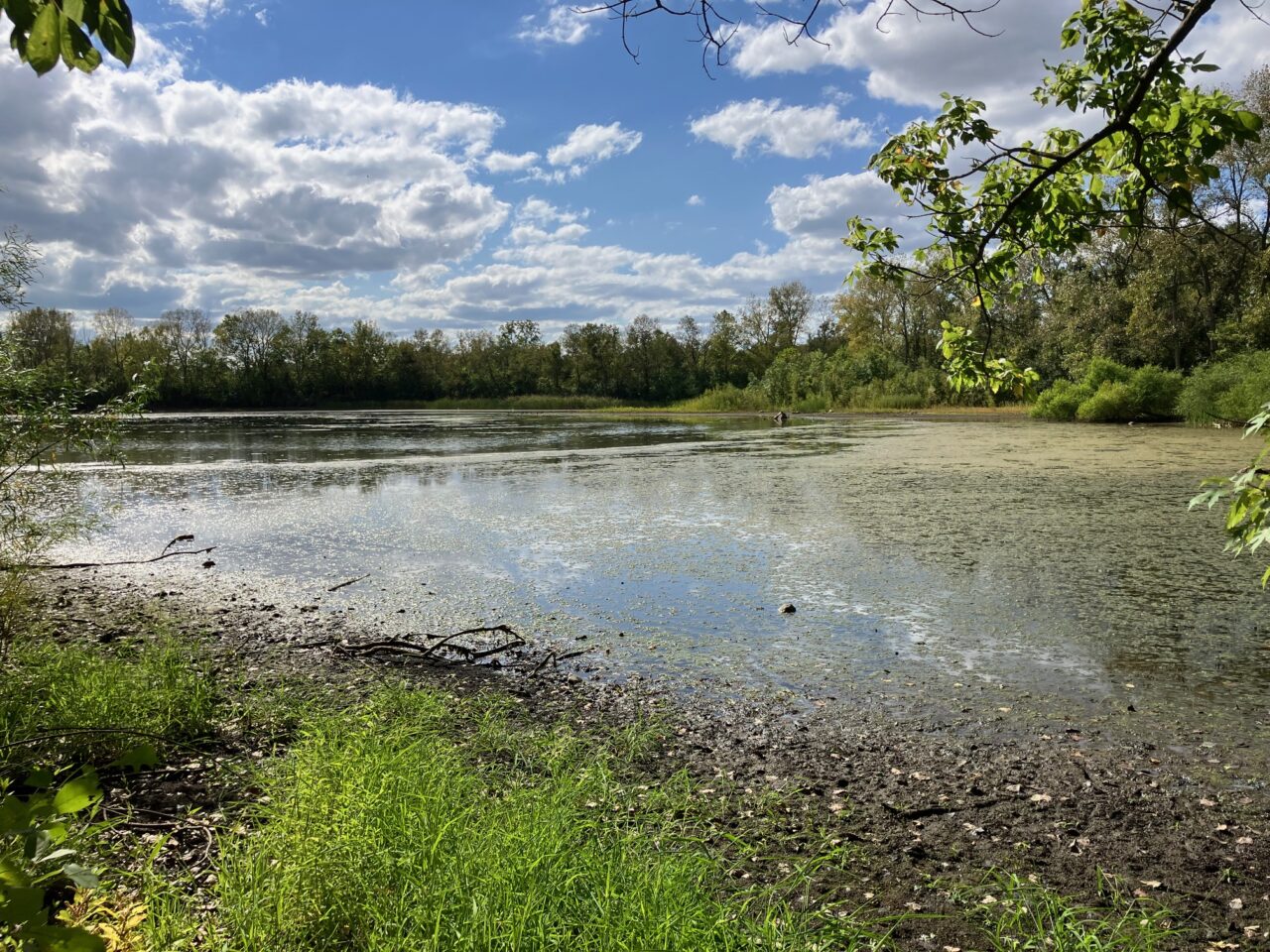
Three Creeks Borrow Pits – this huge wetland is apparently the result of taking fill for the nearby I-270 freeway, and it sits along the Alum Creek Trail bikepath in 3 Creeks Park. It consists of 2 pools: a large northern one and a grown-in southern one. The northern is the better one, and is easily visible from the bike path. It’s quite shallow and often hosts egrets, herons, and dabbling ducks. Your best strategy is to park at the Madison Mills area of Three Creeks Park along Williams Road, and walk down the bikepath 1/3 mile, going under I-270 to the pool on the other side.
Galloway Road retention ponds – this is a series of drainage ponds in housing developments south and east of Galloway Athletics Park, along Galloway Road south of Hall Road. They are quite shallow, so suffer the usual weather-related vagaries of water level. These are great to pick through large goose flocks for unusual geese. The best one is furthest south, up against the tree line south of the Park. The advantage here is that they are all along Galloway Road, so you can practically bird them from your car (though be careful about pulling off as the shoulders are soft here).
Hamilton Run and Alton Place – Hamilton Run wetland is a marsh at the north end of Hamilton Run, north of Roberts Road. Mostly west of it is the new Alton Place development, which not only has a footpath and bridge along the marsh, but has dug out 3 retention ponds. This spot has proven very good for ducks and geese, even in deep winter. I currently park along Sycamore Place in the housing development, but as it keeps expanding that’s likely to change.
Franks Park – Clover-Groff lake – this big lake sits along the Mudsock Trail south of Franks Park at the edge of Hilliard, just west of Clover-Groff creek. Its shallow edges allow waders and dabbling ducks to feed and rest there, and it can also get diving ducks in the deeper center. Your best access is to park at Franks Park off Frazell Road, and walk the trail over the creek and south to the lake, about ¼ mile.
Elliott Road retention pond – this pool sits along Elliott Road just north of Scioto Darby Road at the northwest edge of Hilliard. Since you’re close to open fields here, the pond seems to attract more shorebirds than many of the more urban ponds. You can pull off along Elliott Road, but may need to find a path down to the edge of the pool, as the edge has grown up quite a bit.
All of these are rather shallow wetlands, which is what makes them good for shorebirds and dabblers. However, it also makes them prone to drying out in extended droughts, so they could be dry by the time you read this. They also often grow up into cattail and reed marshes, so many of them may only have a birding lifespan of 5-10 years before the vegetation overruns them. You may want to visit them sooner rather than later.
Perhaps you have a favorite undiscovered wetland that didn’t make this list? By all means share it with us; you can email me at [email protected]. There are a LOT of hidden wetlands around Columbus now, and the more we know about all the wetlands in our area, the better we can monitor and possibly protect them.