
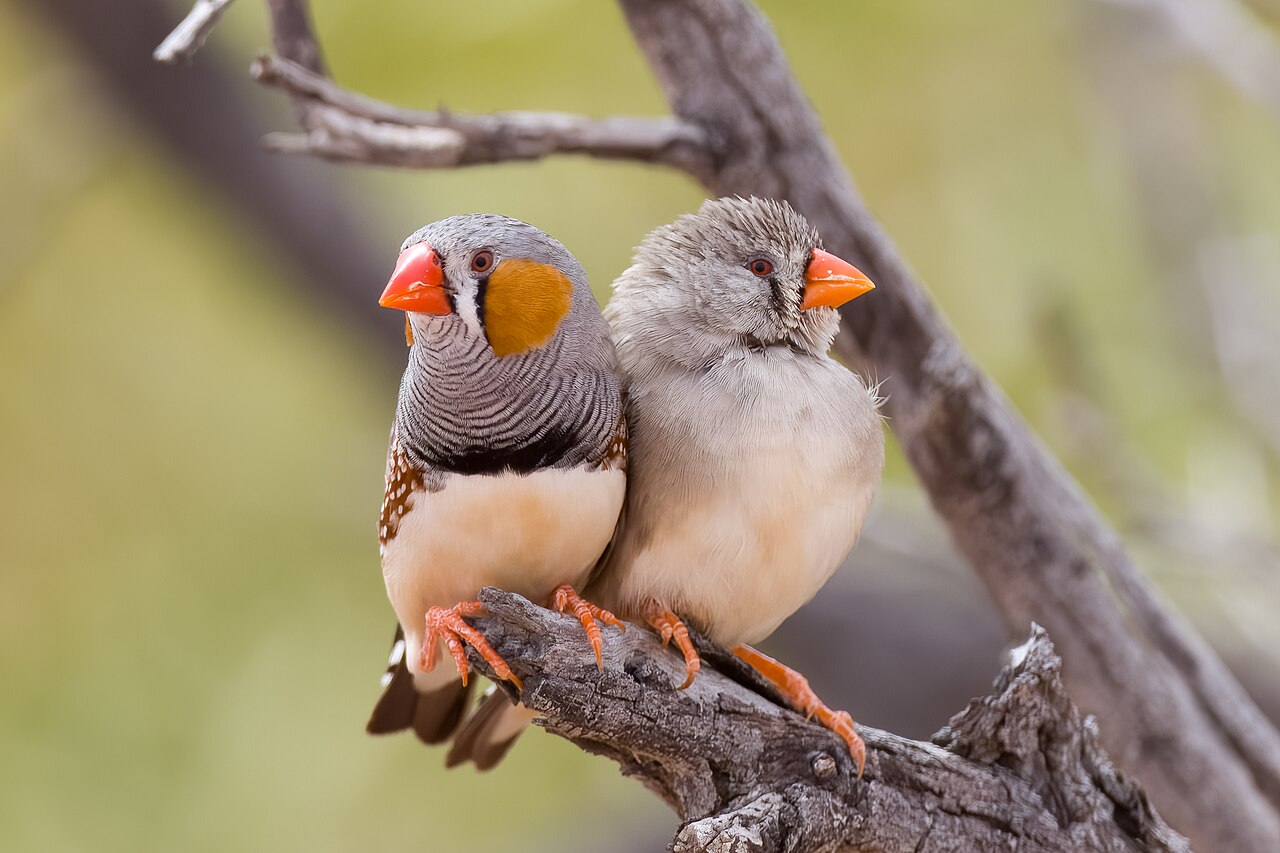
(featured image photo credit: PotMart186, Wikimedia, CC BY-SA)
By Kate McFarland
When neuroscientist Julie Elie won the 2026 Coller-Dolittle Prize for her work on semantic cognition in Zebra Finches, international news media proclaimed that she had “decoded birdsong” and used Zebra Finches’ vocabulary “to talk back to them.”
It makes sense that the headlines would conjure images of two-way conversations between people and birds: The Coller-Dolittle Prize was created to reward research that brings humanity closer to interspecies communication. As a philosopher of language, however, I find the biggest upshot of the research to be even more fascinating: Elie’s work, published last fall in Science, brings us closer to learning how Zebra Finches understand their own calls.
To better understand its importance, let’s step back and ask (in a variant of President Clinton’s grand jury testimony) “what the meaning of the word ‘meaning’ is.” Humans use language for a variety of purposes. Birds also accomplish a variety of tasks with their vocalizations: they attract mates, defend territory, warn of predators and nest parasites, beg for food, coordinate navigation in flocks, and more. Scientists who study avian communication assign “meanings” to calls according to their apparent function, based on observations of the circumstances in which birds produce the calls and the behaviors that other birds display when they hear them.
But do birds’ utterances mean anything to the birds themselves? Do birds think to themselves things like, say, “I’d better make the ground-threat-call to warn my flock mates of that cat”?
To elucidate the problem, let’s look at one use of language that’s important to both philosophers and ornithologists: using specific sounds to denote particular objects in the world – like we do, for example, when we call to a fellow birder “Jane!” or point to a spot in the trees and whisper “Yellow Warbler.”
You might have heard that some birds have the ability to refer to other animals in their environment. Maybe you’ve heard that birds employ different alarm calls to denote aerial threats as opposed to ground-based threats, or even to warn of specific types of animals such as snakes or brown-headed cowbirds. But are these birds really using sounds to refer to other animals in the same way we do when we say, “Oh, look – a Yellow Warbler”?
Before coming back to birds, let’s consider some facets of human language. The philosopher and logician Gottlob Frege differentiated between the sense (Sinn) and the reference (Bedeutung) of referring terms like names. The sense of a name is a description that a speaker associates with it. For example, the sense of “The Evening Star” might be “the first star that appears in the evening.” The reference, on the other hand, is the object that the name refers to. The reference of “The Evening Star” is the planet Venus.
Another distinction, introduced by philosopher Saul Kripke, is between the speaker referent and semantic referent. It sounds formal, but it captures a familiar phenomenon: Sometimes we don’t choose the correct words to express what we mean to say, yet we manage to communicate nonetheless. (If you’re like me, you can probably think of times that you corrected a “speako,” and your addressee kindly said, “It’s okay, I knew what you meant.”)
As an example, suppose that Sam and Pat are both members of your birding group. During a brain cramp, you say, “Hey, Sam,” while looking at Pat. Sam is also standing in earshot, and both Pat and Sam hear your utterance and turn to look at you. In saying “Hey, Sam” while addressing Pat, did you refer to Pat, Sam, neither, or both? In Kripke’s terminology, the “speaker referent” is whomever or whatever the speaker intends to refer to (Pat in this case) and the “semantic referent” is whomever or whatever the word they use refers to (e.g. Sam).
For another example, imagine that you are a volunteer for Lights Out Columbus, surveying the downtown streets for window collision victims. You find a stunned but living thrush, whom you promptly capture and contain in a paper bag. In the dim morning light, you misidentify the bird as a Wood Thrush (instead of, say, a Brown Thrasher). The bird sits still inside the bag at first, but eventually he perks up and begins scuffling. You say, “The Wood Thrush is moving now.”
Despite the mistaken ID, it seems like you managed to refer to the bird in the bag. That’s what you intended, and that’s how your Lights Out partner understood you. And that would be so even if, unbeknownst to you, there was also a Wood Thrush hopping around nearby in the Statehouse lawn. Formal rules of language might entail that the semantic referent of “the Wood Thrush” in that context is the bird in the Statehouse lawn, but the speaker referent is clearly the misidentified Brown Thrasher that you are carrying.
In human communication, “meaning” is complicated – and a big component has to do with what goes on in our heads, whether we’re talking about the “sense” that we associate with a word, or the object to which we intend to refer (even if we use the wrong word).
So, then, what about birds? If an ornithologist says that Japanese Tits have a specific alarm call that refers to snakes, do they mean that birds mentally associate the call with snakes? …or that the birds intentionally use it to denote specific snakes in their environment? …or that Japanese Tits keep track of a sort of mental dictionary in which the call is defined as “snake”?
In fact, we don’t yet know much about what goes on birds’ heads when they speak.
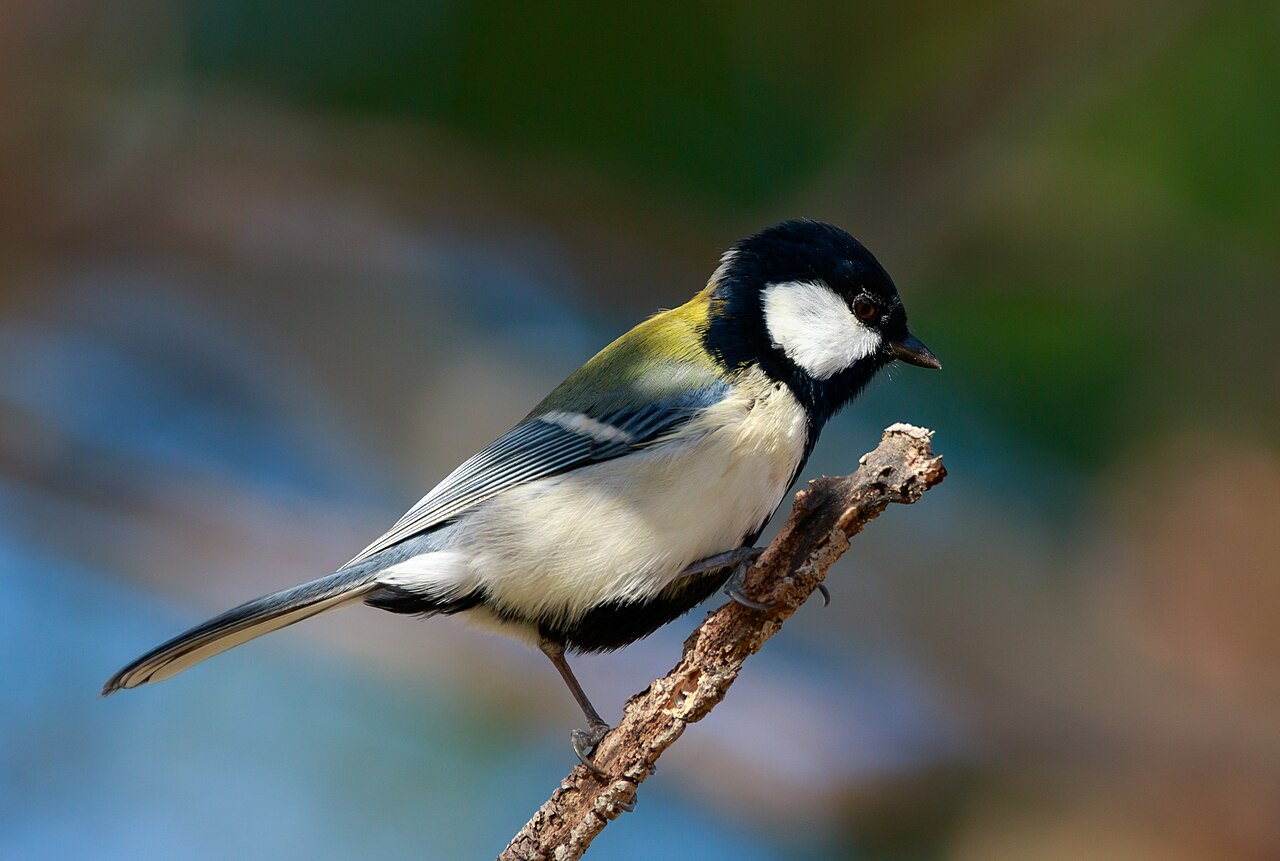
Studies of “bird language” have traditionally relied on a concept called functional reference, which is very different from any of the philosophical concepts of reference described above. Scientists infer the “functional reference” of avian alarm calls by studying the contexts in which birds tend to make a certain call (e.g. the presence of a raptor flying overhead, or a nest parasite, or a cat) and the behavior that conspecifics demonstrate in response (e.g. fleeing, hiding, investigating, or mobbing). When a Japanese Tit sees a predatory snake, for example, the bird makes a “jar” call, and when other Japanese Tits hear this call, they become alert and scan the ground.
Studies of functional reference allow us to predict what calls birds will make when they see certain types of threats, and how other birds will react when they hear these calls. It is even enough to allow us to communicate with birds in a sense. Indeed, that’s what “pishing” is: The birder who “pishes” to draw out birds is mimicking the sound of alarm calls that cause many songbirds to investigate their environment. Humans can also learn to listen to birds’ alarm calls to pick up information about who else might be flying overhead or lurking in the vicinity, as Jon Young suggests in the book What the Robin Knows. Our abilities are already close to the “two-way interspecies communication” that the Coller-Dolittle Prize recognizes.
What functional reference doesn’t tell us, however, is what birds think when they communicate, if they are thinking at all. It doesn’t tell us, for instance, whether a Japanese Tit intends to warn others when he sees a snake – or whether his call is just a reflex. Nor does it tell us if the birds who hear the call are responding to its meaning (“snake?! did I hear there’s a snake?!”) or just reflexively reacting to a sound.
Here’s an analogy. Suppose that your skittish and snake-phobic neighbor Dave steps outside and sees a garter snake in his yard, causing him to exclaim, “Holy heck!” Meanwhile, you are sitting on your porch reading a magazine, and the sound of the alarmed exclamation causes you to look up and scan your surroundings (before you realize, “Oh, Dave saw another harmless little snake”). In this case, the garter snake is the stimulus that causes Dave to yell “Holy heck!” and, in turn, Dave’s utterance of “Holy heck!” is the stimulus that causes you to look around for a potential threat.
But, of course, “Holy heck!” doesn’t mean “garter snake.” “Garter snake” is not the dictionary definition of “Holy heck,” nor did Dave intend to use the expression to refer to the snake. If a naïve child asked, “Is that a holy heck snake?” then we’d chuckle (and feel secretly relieved that Dave expressed his alarm in G-rated language) before explaining that that man is a scaredy-cat. Nor does “Holy heck!” mean the same thing as “Watch out!” Dave didn’t make the utterance with the intention of warning others; it was an instinctive, kneejerk reaction.
Likewise, the notion of functional reference leaves open the possibility that the birds who make alarm calls don’t think of them as such. Might their calls (and other birds’ reactions to them) be nothing more than thoughtless, wingjerk reactions to stimuli?
Unlike the naïve child who asks whether “Holy heck” is the name for a kind of snake, we can’t directly ask Japanese Tits whether “jar” means snake, or whether it means “Look out for snakes!” or whether it just means “Yikes!” Scientists must think creatively.
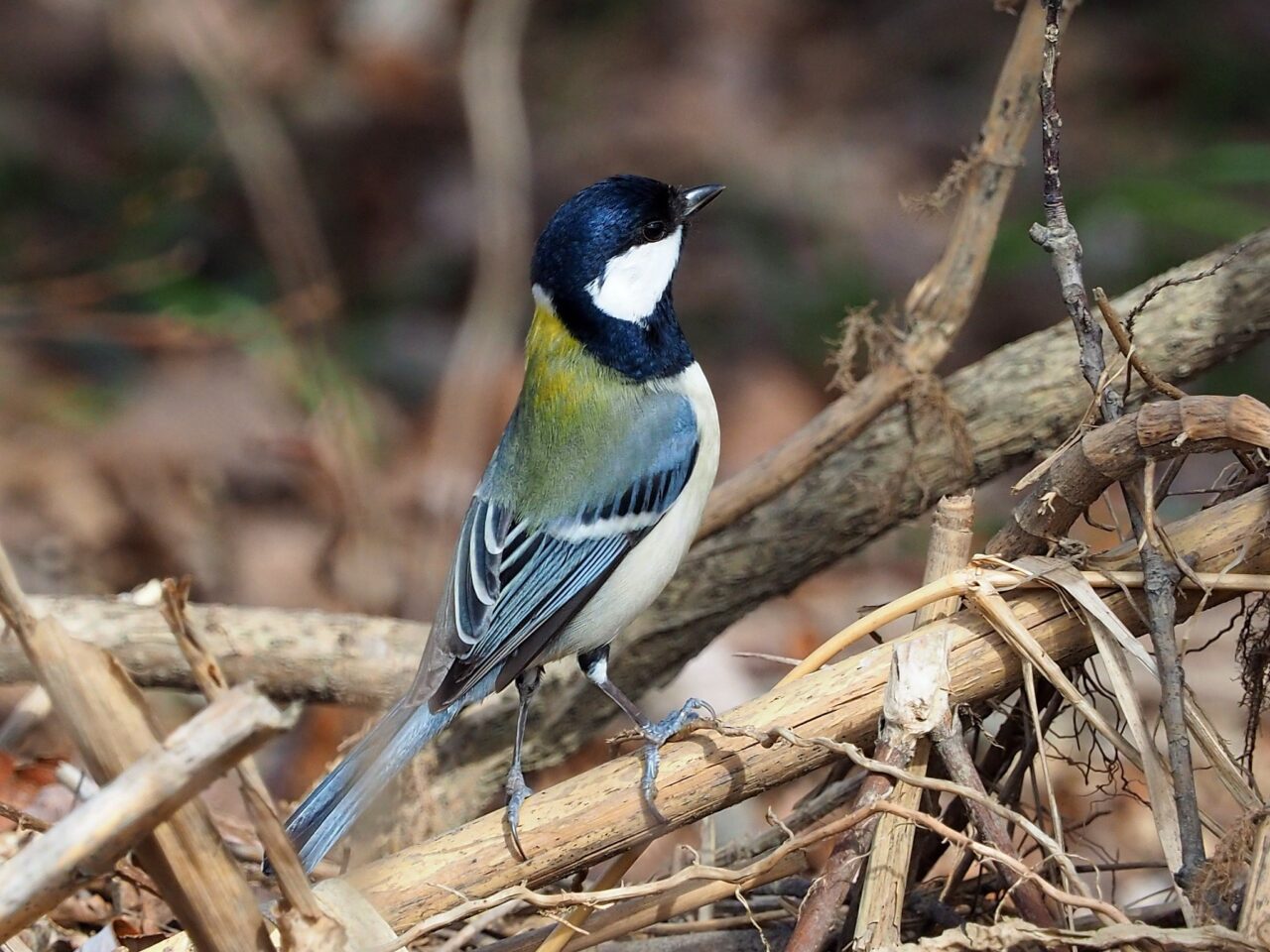
The ornithologist Toshitaka Suzuki devised an experiment to test whether hearing the species’ snake-specific alarm call caused Japanese Tits to investigate snake-like objects (i.e. sticks being moved in a snake-like manner). Suzuki found that, indeed, the snake-specific call provoked the birds to examine the snake-like sticks. However, the same alarm call did not prompt them to investigate sticks that were not moved in a snake-like fashion. Moreover, the species’ general alarm call did not lead the birds to examine even the snake-like sticks.
Suzuki interpreted this result to mean that the snake-specific alarm call – described elsewhere as the “jar” call – caused Japanese Tits to form a mental image of a snake. The birds chose to inspect only those objects that fit that mental image.
Looking at Zebra Finches, Julie Elie took a different strategy toward assessing how birds think about their own calls. Like Suzuki, Elie wanted to know whether Zebra Finches think in terms of something like “word meaning” when they listen to other Zebra Finches. However, Elie examined the full known repertoire of the species’ vocabulary rather than focusing on one particular call, and she studied how the birds themselves categorize their own sounds.
Imagine a task where you’re rewarded for identifying words that belong to the same group – exclamations, expressions of gratitude, terms of endearment, etc. This, roughly, was the first phase in Elie’s experiment: She wanted to see whether Zebra Finches grouped their own calls into the same categories that researchers had come up with. The birds were played recordings of their species’ calls and rewarded for grouping “like with like.” Luckily for ornithologists, the Zebra Finches agreed with the way humans had categorized their calls.
Elie also discovered an even more interesting result: Zebra Finches were more likely to misclassify calls that were semantically related (e.g. confusing different types of alarm calls) than those that were acoustically similar.
Another analogy might help to illuminate the significance here. Suppose a scientist rewards you for pressing a button when you hear a certain word. You’ve figured out that the rewarded word is ‘
“egret” but your mind wanders during the experiment, and sometimes you err. Are you more likely to mistakenly hit the button when you hear words that are acoustically similar to “egret” (like “egress” or “regret”) or words that are semantically related to “egret” but sonically very different, like “heron” or (gasp) “crane”? If your mistakes are of the latter sort, then that’s strong evidence that you’ve made a mental image of an egret rather than merely reacting to the sound of the word. In other words, you are thinking of the word’s meaning.
And that, in rough terms, is what Elie discovered about Zebra Finches.
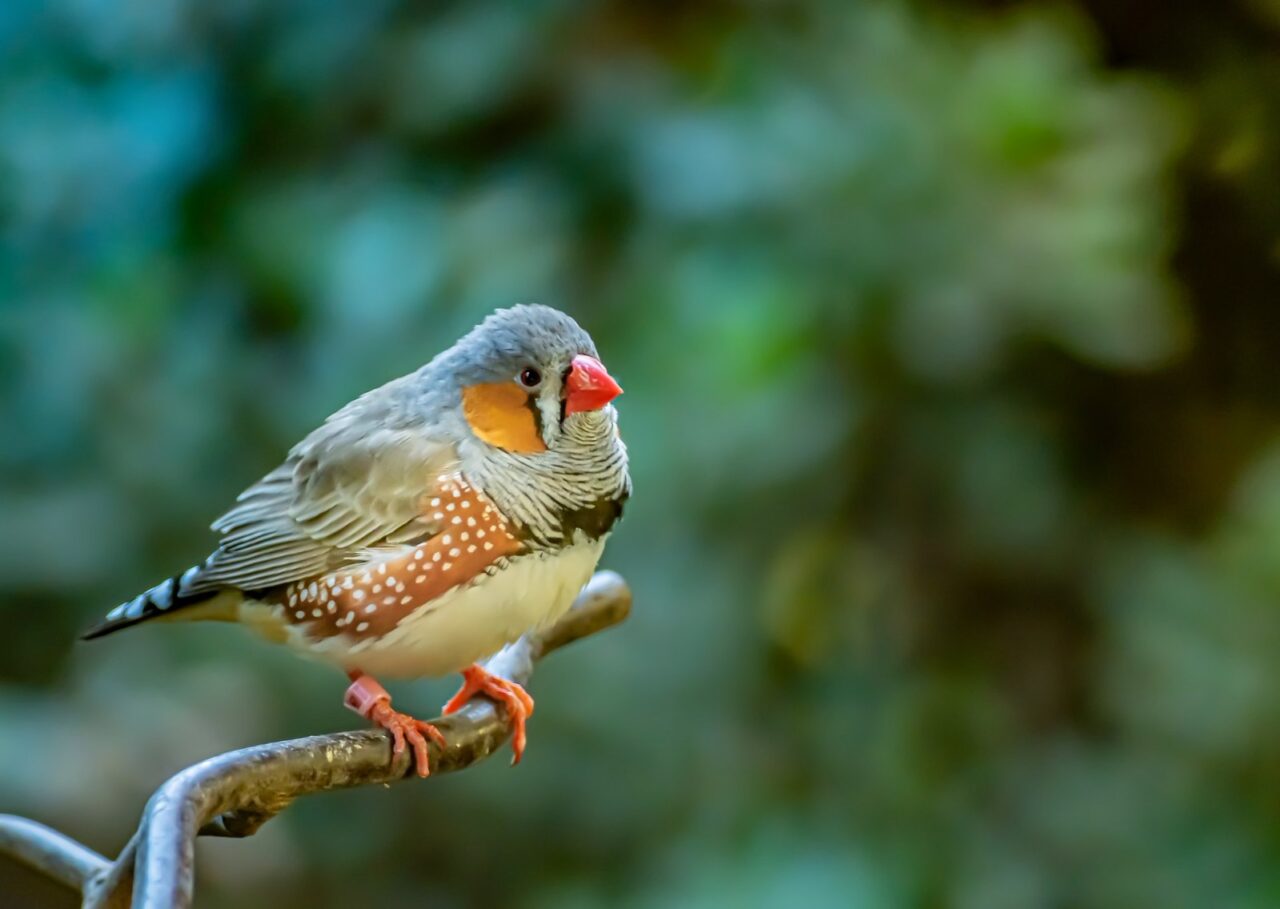
Through this award-winning research, Elie has taken steps toward understanding how birds themselves mentally represent their own calls – and that, in my view, is much morefascinating than being able to “talk to” the birds. Plausibly, we could learn to communicate with birds without understanding anything about their mental states, just like we can “talk to” ChatGPT while blithely ignoring that it doesn’t have any. In fact, if you ever “pish,” you are already using something like “bird language” to talk to the birds.
Elie gives us a glimpse of something even more profound: how birds might be thinking when communicating amongst themselves – and evidence that they are thinking and interpreting meaning instead of thoughtlessly reacting to auditory stimuli.
Kate McFarland is the Center Associate for the Ohio State University Center for Ethics and Human Values. She completed her PhD in the philosophy of language two years before meeting her spark bird in Columbus.